
How to Become an Electrical Lineman: Step-by-Step Process & Requirements

If you're considering a career in electrical linework, you may be wondering exactly what it takes to get started. Do you need a college degree? Should you attend lineman school? Do you need a CDL? And when does an apprenticeship come into the process?
While specific requirements vary by employer, union, apprenticeship program, and location, there are several common steps aspiring electrical lineworkers can take to prepare for the trade. Here's a step-by-step look at the process.

Step 1: Earn a High School Diploma or GED
A high school diploma or equivalent is commonly required for entry-level lineworker positions and apprenticeship opportunities.
A four-year college degree is generally not required to begin pursuing a career in electrical linework. Instead, employers often focus on whether applicants have the education, physical abilities, driving qualifications, safety awareness, and technical skills needed for the job.
Courses involving mathematics, mechanics, electrical concepts, and technical education can provide useful preparation.
Step 2: Understand the Physical and Safety Requirements
Electrical linework is a physically demanding profession. Lineworkers may work outdoors in challenging weather conditions, climb poles, work at heights, operate equipment, and perform tasks around electrical systems. Depending on the employer or apprenticeship program, applicants may also be required to meet specific physical, medical, drug-screening, background, driving, or aptitude requirements. Because requirements differ, candidates should always review the qualifications for the specific employer or apprenticeship program they plan to pursue.
Step 3: Complete Lineworker Training
Many aspiring lineworkers choose to attend a specialized lineman school or pre-apprenticeship program before applying for entry-level employment or an apprenticeship.
This type of training provides an opportunity to develop foundational knowledge and practice lineworker skills in a structured environment. At the Linemen Institute of the North East (L.I.N.E.) in Kingston, New York, students complete a 500-hour Electrical Lineworker Program. The program combines classroom education with extensive hands-on field training designed to help prepare students for entry-level opportunities in the electrical linework industry.
Step 4: Develop Hands-On Lineworker Skills
Hands-on experience is an important part of preparing for a career in linework.
Students can develop skills involving climbing, tools and equipment, rigging, line construction fundamentals, safe work practices, and other areas relevant to the trade.
At L.I.N.E., classes are limited to a maximum of 60 students. Students are divided among instructors to maintain appropriate student-to-instructor ratios and provide opportunities for more individualized instruction during hands-on training. This allows students to practice skills under instructor supervision rather than relying solely on classroom instruction.
Step 5: Work Toward a Commercial Driver's License (CDL)
A Commercial Driver's License can be an important qualification for electrical lineworkers because utilities and contractors operate commercial vehicles and heavy equipment.
Specific CDL requirements depend on the employer and position.
L.I.N.E. incorporates CDL preparation into its Electrical Lineworker Program and includes two CDL testing attempts. Students under age 21 may work toward a Class B CDL, while eligible students age 21 and older may pursue a Class A CDL.

Step 6: Build Safety Knowledge and Industry Qualifications
Safety is a critical part of electrical linework. Aspiring lineworkers should become familiar with safe work practices, personal protective equipment, jobsite communication, and the proper use of tools and equipment. Employers may also require specific certifications or additional training depending on the position. There is no single set of certifications that applies to every lineworker job, so candidates should research the requirements of the employers and apprenticeship programs they are interested in.
Step 7: Apply for Entry-Level Lineworker Jobs and Apprenticeships
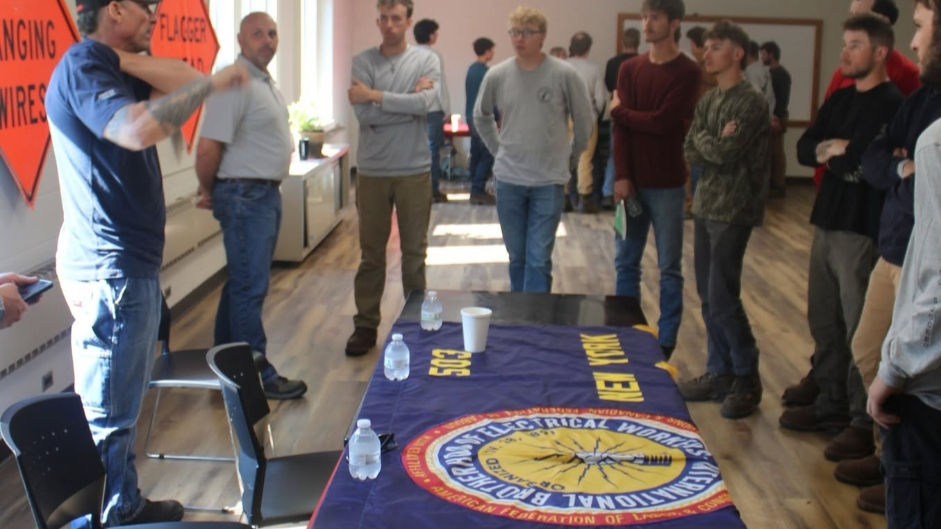
After completing pre-apprenticeship training, graduates can begin pursuing opportunities within the electrical utility and construction industries. Potential career paths may include electric utilities, utility contractors, municipal utilities, cooperatives, telecommunications companies, and union or non-union apprenticeship programs. Completing lineman school can help candidates develop foundational skills and prepare to compete for these opportunities. However, graduating from a pre-apprenticeship program does not automatically make someone a journey-level lineworker or guarantee employment.
Step 8: Complete an Apprenticeship or Employer Training Program
For many electrical lineworkers, the next major step is an apprenticeship or structured employer training program. An apprenticeship typically combines paid on-the-job experience with additional technical instruction. During this period, apprentices work under experienced lineworkers while developing more advanced skills and accumulating the field experience required to progress within the trade. The length and requirements of an apprenticeship vary by program.
Step 9: Progress Toward Journey-Level Lineworker Status
People often search for information about becoming a "certified electrical lineman." However, there isn't one universal national certification that automatically makes someone a fully qualified lineworker. The terminology and requirements can vary among utilities, contractors, unions, apprenticeship programs, and jurisdictions. For many career paths, completing an apprenticeship or employer training program and meeting its requirements leads to journey-level lineworker status. That's why it's important to distinguish between completing lineman school and completing the years of supervised field training that may be required later in your career.
How Long Does It Take to Become a Lineman?
The initial education and training portion can be completed much faster than a traditional four-year college degree. L.I.N.E.'s Electrical Lineworker Program, for example, consists of 500 hours of training. Becoming a journey-level lineworker generally takes longer because apprenticeships and employer training programs involve extensive supervised field experience. Think of lineworker school as a way to prepare for the beginning of your career path, rather than the final step.
Start Your Lineworker Career at L.I.N.E.
If you're ready to take the first step toward a career in electrical linework, the Linemen Institute of the North East provides intensive classroom and hands-on field training in Kingston, New York. The program is designed to help students build foundational skills and prepare for entry-level opportunities and the next stage of their lineworker careers.
Upcoming Classes
Spring 2027: January 4 – April 8 — FULL
Summer 2027: April 19 – July 22 — Enrollment Available
Fall 2027: August 2 – November 4 — Enrollment Available
Classes are limited to 60 students, and available spots can fill quickly. Students interested in a particular start date are encouraged to apply early.
Ready to get started? Explore L.I.N.E.'s Electrical Lineworker Program, learn about tuition and financing options, schedule a campus visit, or apply for admission today.


Comments